The Ultimate Mental Energy Management System for Remote Workers in 2026
When your office can be anywhere, energy becomes your real currency. You can have a free calendar and still feel fried. This guide shows how to manage your mental battery with simple routines: track your peaks, protect deep work, reduce digital noise, and recharge with micro-rituals that make remote life sustainable.

In this guide
- Energy over time: the mindset shift
- What drains energy in remote work
- Track your energy patterns
- Boundaries and psychological detachment
- Digital minimalism: stop leaking attention
- Deep work blocks and micro breaks
- Rituals that recharge
- Movement, nutrition, sleep
- Supportive systems and autonomy
- Your 7-day energy blueprint
Energy over time: the mindset shift
Most productivity advice treats your day like a storage unit: pack more in. Energy management treats your day like a battery: protect it, recharge it, and spend it on the work that matters most.
Match demanding work to your peak energy hours.
Deep work first: admin later.Reduce unnecessary decisions, interruptions, and context switching.
Less friction: more output.Build micro breaks and rituals so recovery is automatic.
Recovery is part of the system.What drains energy in remote work
Remote work can quietly turn into “always on” mode: fewer natural boundaries, more notifications, and more self-control required to resist distractions. Isolation and constant digital inputs also increase mental load.
- Blurred boundaries: work expanding into every corner of the day.
- Digital overload: pings and reactive work replacing planned work.
- Video fatigue: constant meetings that drain attention and mood.
- Decision fatigue: too many small choices stacking up.
Track your energy patterns: your personal dashboard
The easiest way to upgrade energy is awareness. Track what drains you and what recharges you for one week. Keep it simple: a 10-second note after key blocks.
Fast tracking method
- After a task: rate energy 1–5.
- Tag it: energizing, neutral, draining.
- Notice patterns: meetings, client calls, certain apps, certain times.
You’re not trying to judge your day: you’re trying to understand it.
Boundaries and psychological detachment: the recharge switch
You can’t refill a battery while it’s still powering the device. Remote work needs intentional shutdown cues: a closing ritual, a walk, or a “fake commute” that tells your brain the workday is over.
- Start cue: coffee, journaling, or a 2-minute plan.
- Stop cue: laptop closed, desk reset, and a short walk.
- Dedicated space: even a small corner signals “work” versus “rest.”
Digital minimalism: stop leaking attention
Interruptions don’t just break focus: they increase fatigue. Protect energy by batching communication and using async-first habits: clear documentation, recorded updates, and fewer real-time disruptions.
Two rules that save a surprising amount of energy
- Batch messages: check email and chat at set windows.
- Set expectations: define response times so “quiet” isn’t “missing.”
Deep work blocks and micro breaks: focus without the crash
Most people only have a few hours of true peak focus per day. Treat those hours like premium real estate: schedule them first, guard them from meetings, and use breaks to prevent fatigue.
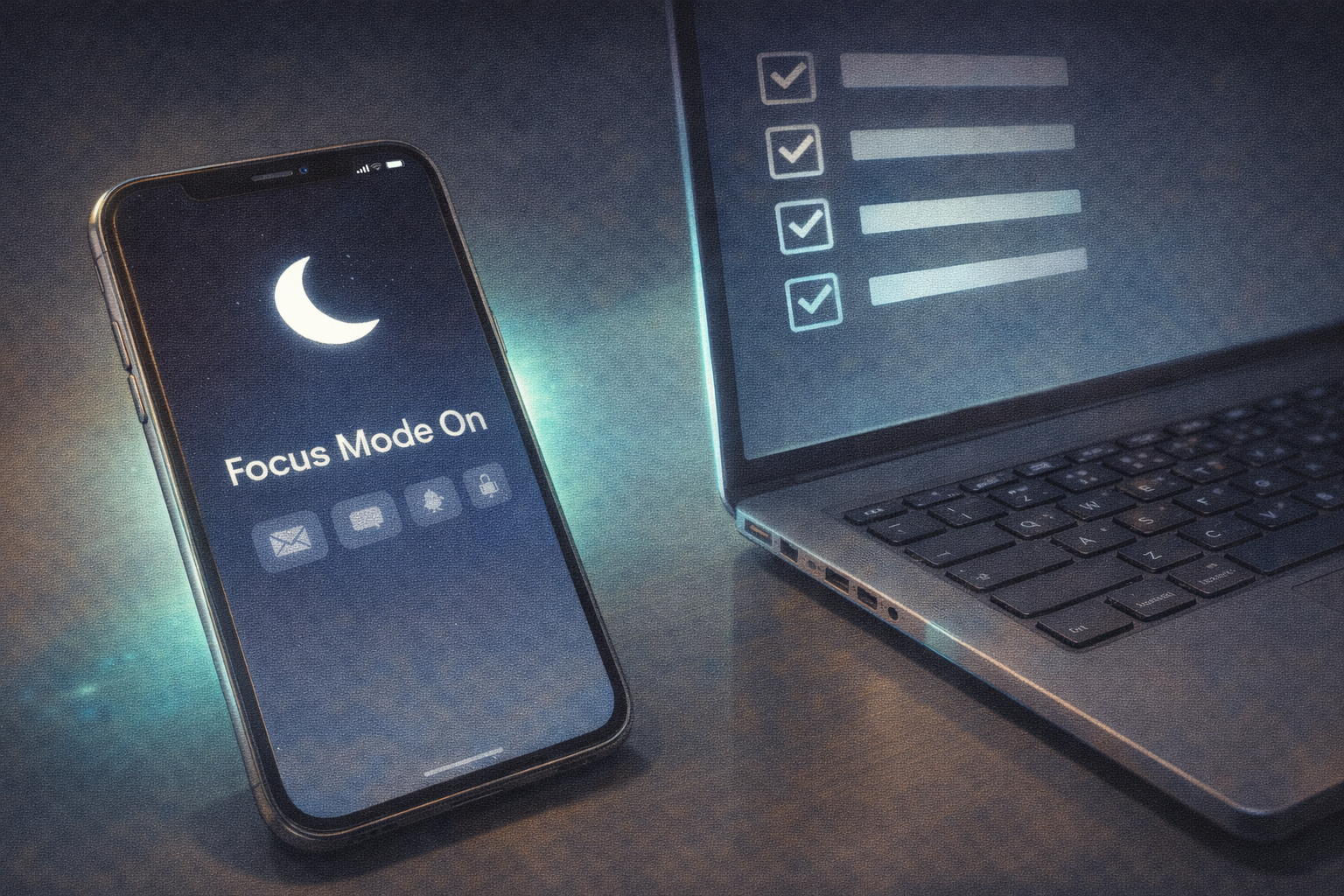
- Deep work block: 60–90 minutes with notifications off.
- Micro break: 5 minutes: stand, breathe, water, sunlight.
- Rhythm: repeat 2–3 cycles, then switch to lighter tasks.
Rituals that recharge: small habits, big stamina
Remote work removes natural transitions. Add them back with tiny rituals: a short walk, a tea reset, a playlist that signals focus, or a “third-space” moment between work and life.
- Micro adventures: a quick outdoor loop at lunch.
- Meetings reset: audio-only when possible, camera breaks when not.
- Task pairing: do admin during low-energy hours, protect creative time.
Movement, nutrition, sleep: the physical foundation of mental energy
Mental energy rides on physical habits. Short movement breaks, hydration, and consistent sleep routines reduce anxiety and stabilize attention. If you only fix one thing this week: protect sleep.
- Movement: 10-minute walk or stretch to reset the nervous system.
- Nutrition: steady meals to avoid energy crashes.
- Sleep: consistent schedule, less late-night screens, better recovery.
Supportive systems and autonomy: energy scales with environment
Sustainable energy is not only personal discipline. It’s systems: outcome-based expectations, clear priorities, fewer unnecessary meetings, and culture that respects off-hours. Autonomy boosts energy: micromanagement drains it.
Tools that help protect your mental battery
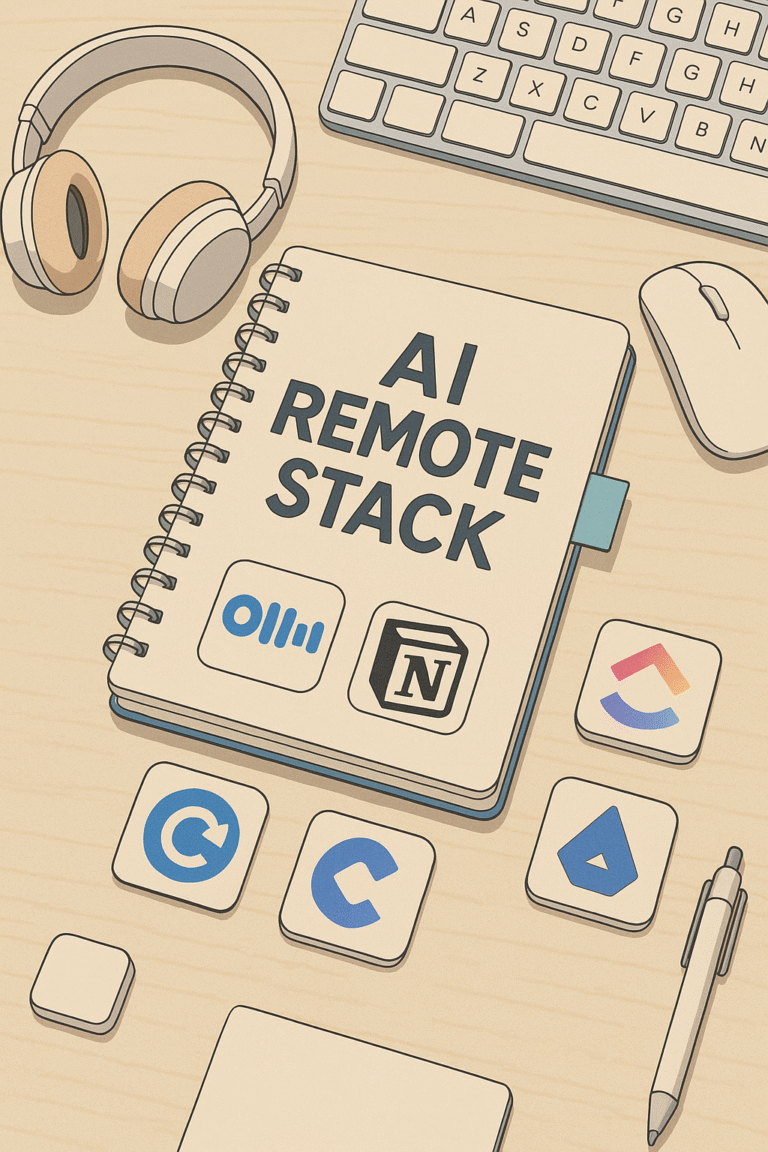
You do not need more apps. You need fewer tools used consistently. These three help reduce decision fatigue, protect focus, and create recovery space:
Notion: track peaks and plan around them
A simple energy tracker helps you see patterns: which tasks drain you, which meetings spike fatigue, and which hours are best for deep work.
- Weekly energy review in one page.
- Task planning by energy level.
- Easy habit and ritual tracking.

Website blockers: fewer interruptions, less fatigue
If self-control feels expensive, make it cheaper. Block distracting sites during focus windows so your brain stops fighting itself.
- Scheduled focus sessions.
- Reduced context switching.
- Better deep work consistency.

Virtual coworking: structure without pressure
When motivation dips, lightweight accountability keeps you moving. Book a session, pick one task, and let the timer do the talking.
- Great for low-energy days.
- Helps start tasks faster.
- Pairs well with micro-goals.
Your 7-day energy blueprint
- Day 1–2: track energy after major tasks: 1–5 rating.
- Day 3: identify your top peak window and protect it for deep work.
- Day 4: batch messages into two daily windows.
- Day 5: add two micro breaks: walk, stretch, sunlight.
- Day 6: create a shutdown ritual: close, reset, walk.
- Day 7: review patterns and adjust next week’s schedule around energy, not guilt.
Remote work becomes sustainable when you stop trying to power through and start managing the battery.
Want a system that supports your goals: and your life?
Energy management works best when it connects to realistic goals and real-world planning. Here are two strong next steps:
The staff partially generated this text content with ChatGPT, OpenAI’s large-scale language-generation model. Upon generating draft language, the staff reviewed, researched, and revised the language to their own liking and takes ultimate responsibility for the content of this publication. Dryfter Bloom may receive free products from manufacturers for review purposes. We do not accept payment for positive coverage, and all opinions are our own. We may also earn a commission when you buy through a link on our site.