Unbreakable Focus: Deep Work Techniques for Noisy Environments (2026)
Remote work looks aesthetic on Instagram. In real life, it’s clattering dishes, background chatter, barking dogs, and that one person who thinks every call should be on speaker. Noise isn’t just annoying: it drains focus, spikes stress, and quietly makes everything take longer. This guide shows how to build deep work systems that protect your attention and your ears, even when the world around you is loud.

In this guide
- The hidden toll of noise
- Deep work principles that beat distraction
- Noise-cancelling headphones: the “audio cocoon”
- Craft a focus-friendly environment
- Music and soundscapes that help
- Deep work rituals and routines
- Asynchronous communication: reduce digital noise
- Extra tools that protect focus
- A 15-minute setup plan
The hidden toll of noise: productivity, health, and mental wellbeing
Noise doesn’t just distract: it taxes your brain and body. Loud environments can increase fatigue, stress, and frustration. Remote workers often compensate by turning up headphone volume, which can push sound levels into unsafe ranges over time.
The first step is to treat noise like a workflow variable, not a personality test. When you design for sound, deep work becomes easier to enter and easier to repeat.
Deep work: the antidote to distraction
Deep work is uninterrupted focus on cognitively demanding tasks. It’s how you write, build, design, analyze, and solve hard problems. Loud environments fight deep work by constantly restarting your attention.
Three deep work principles that work anywhere
Schedule focus windows when noise is lowest: early morning, quiet hours, or booked pods.
Start small: begin with a quick task, then stack into bigger work once momentum kicks in.
Break strategically: 60–90 minutes of focus, then a short reset to prevent mental fatigue.
Time blocks beat “trying harder”
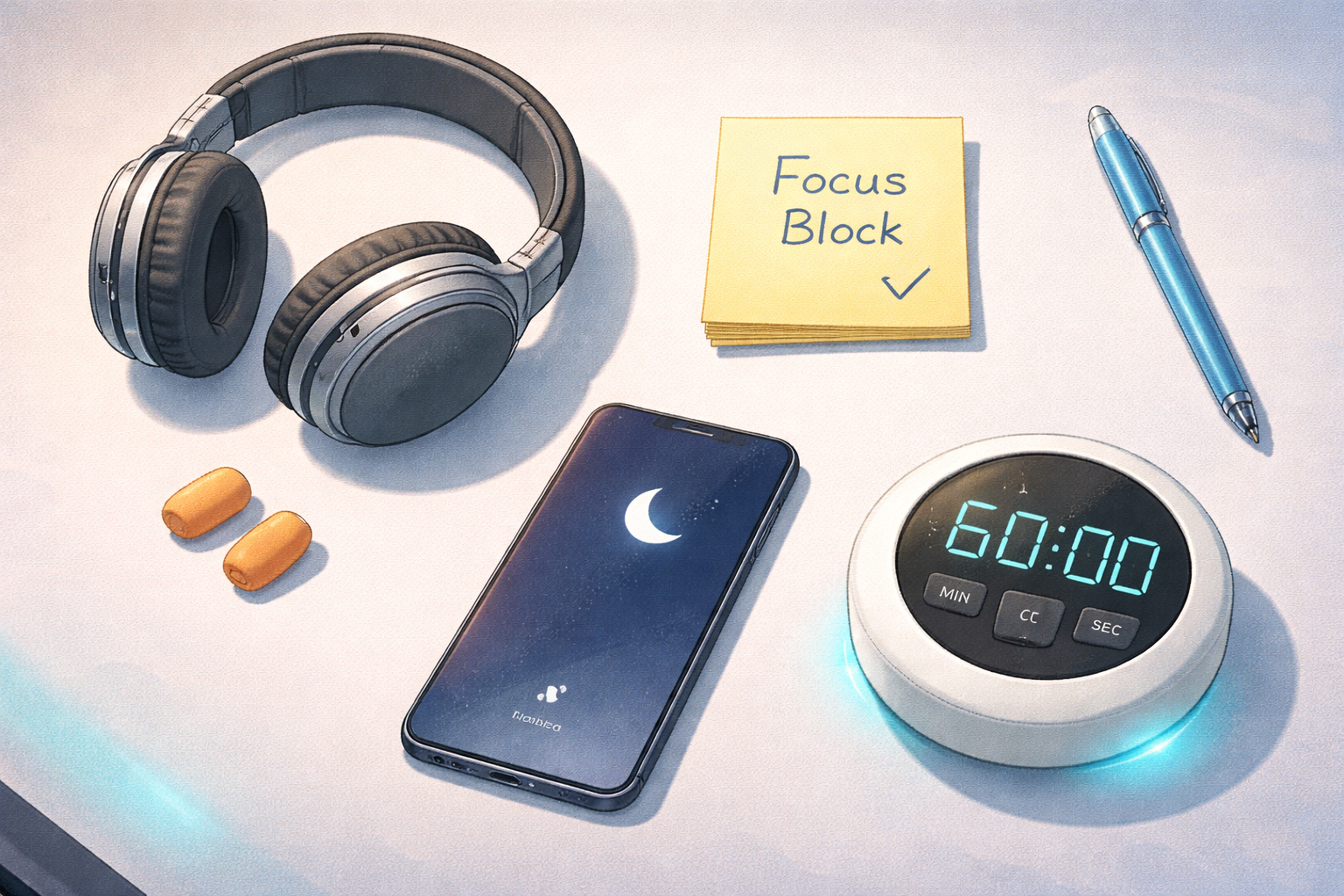
Use a fixed focus block (60–90 minutes) and a single output goal: one deliverable that makes the session “successful.” This gives your brain a target and a finish line.
Noise-cancelling headphones: your best ally
Noise-cancelling headphones create an “audio cocoon” that shields you from low-frequency hums (traffic, AC, engines) and acts as a behavioral cue: when they go on, you’re in focus mode.
- Choose comfort first: ear fatigue kills deep work faster than noise.
- Use ANC + over-ear isolation to keep volume moderate.
- Save transparency mode for announcements and safety needs.
Craft an environment for deep focus
Headphones help, but your environment is your baseline. You can lower noise and reduce the unpredictability that triggers attention resets.
Quick environment upgrades
- Absorb sound: rugs, curtains, bookcases, soft furniture, even a folded blanket behind your desk.
- Seal gaps: door sweeps and draft stoppers reduce hallway noise.
- Mask chaos: white noise, rain, or brown noise smooths unpredictable spikes.
- Negotiate etiquette: “headphones on = focus mode” in shared spaces.
Use music and soundscapes to your advantage
Not all sound is bad. Intentional soundscapes can increase focus by making your audio environment consistent. Instrumental playlists, lo-fi, video game soundtracks, and nature loops tend to work best because they don’t hijack language centers.
Pro tip: build one “deep work soundtrack” and reuse it. Repetition becomes a focus trigger: your brain learns what time it is.
Deep work rituals and routines
Noise control is only half the battle. Rituals train your brain to enter focus faster.
- Start: stretch, breathe, or journal for 2 minutes to signal “work begins.”
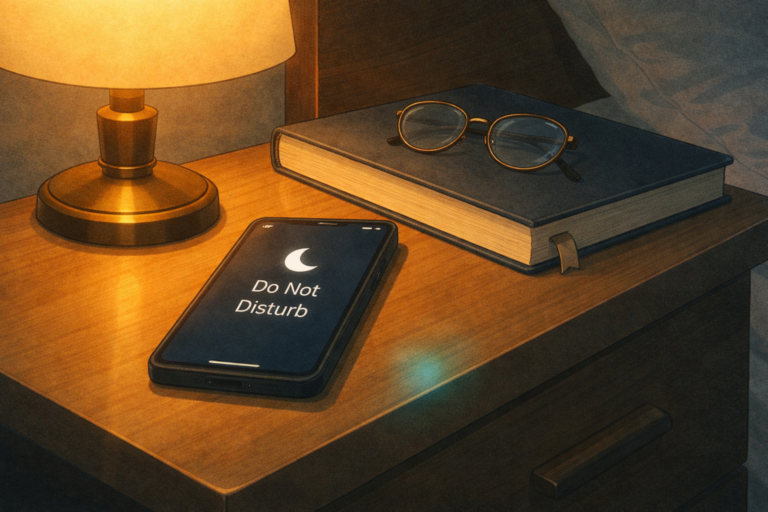
- Silence: phone out of sight, notifications off, tabs closed.
- Break: stand, walk, and give your ears a reset.
- Stop: tidy the desk and remove headphones to mark the end of focus mode.
Asynchronous collaboration: reduce communication noise
Digital noise can be as disruptive as physical noise. Async-friendly norms let you mute notifications without guilt: clear channels, response expectations, and overlap windows for urgent matters.
Async message template (copy/paste)
- Context: What’s happening and why it matters.
- Action: What you need, who owns it, and the deadline.
- Assets: Links to docs, examples, screenshots.
Additional tools and techniques
- Website blockers: Freedom, Cold Turkey, or Focus modes to protect deep work blocks.
- Virtual coworking: Focusmate for gentle accountability.
- Task dashboards: Notion or Trello to turn goals into micro-actions.
- Call etiquette: default mute on meetings to avoid spreading chaos.
Your 15-minute setup plan
- Minute 1–3: pick your deep work window (today) and one output goal.
- Minute 4–6: set DND, close tabs, clear the desk.
- Minute 7–9: choose your sound plan: ANC + brown noise / rain loop.
- Minute 10–12: set a 60–90 minute timer and start with a small task.
- Minute 13–15: schedule a break and write the next action for tomorrow.
You don’t need perfect silence. You need a repeatable system that protects your attention.
Want systems that make remote life easier: not just louder?
Deep work is one piece of the puzzle. Build momentum with realistic goals, and use travel systems that keep your budget intact. Here are two quick next steps:
The staff partially generated this text content with ChatGPT, OpenAI’s large-scale language-generation model. Upon generating draft language, the staff reviewed, researched, and revised the language to their own liking and takes ultimate responsibility for the content of this publication. Dryfter Bloom may receive free products from manufacturers for review purposes. We do not accept payment for positive coverage, and all opinions are our own. We may also earn a commission when you buy through a link on our site.