Simplified Collaboration In 2026: Remote Systems That Keep Projects Moving Across Time Zones
Global teams are normal now: Berlin, Boston, Buenos Aires, Bangkok—sometimes all on the same project. The problem isn’t time zones. The problem is running time zones without any structure. This guide shows how to build remote systems that scale with clear processes, async-first communication, and tools that keep everyone aligned without making anyone permanently tired.

In this guide
- Asynchronous time is the reality
- Remote-first culture and boundaries
- Async workflows that actually work
- Overlap hours and reference time zone
- Tool stack that scales
- Communication protocols and meeting hygiene
- Outcomes over hours
- Hiring and onboarding for async
- Well-being without “always-on”
- 30-day implementation playbook
Asynchronous time is the reality
Distributed teams don’t share the same day, rhythm, or local context. What used to be quick hallway alignment now needs structure. If you don’t design for async, you’ll accidentally design for burnout: late-night pings, delayed handoffs, and meetings that punish the same region every week.
The goal isn’t “no meetings.” It’s fewer meetings with better inputs, and async defaults that keep work moving while people sleep.
Remote-first culture starts with boundaries
Culture is not a values slide: it’s the rules people actually follow. For time zones, culture starts with clear expectations: which channel is for what, when people should respond, and when they’re off.
Set these three norms (and watch chaos shrink)
- Channel clarity: Slack for quick questions, project tool for tasks, email for formal updates.
- Response expectations: define “same day,” “24 hours,” and what counts as “urgent.”
- Off-hours protection: no expectation to reply outside local working hours.
Bonus: Encourage scheduled messages so people can write now and deliver later—kindness, but make it operational.
Async workflows that actually work
Async doesn’t mean “silent.” It means leaving enough context so your teammate can act without waiting for you to wake up. Treat every async message like a mini-brief.
What’s the background and why does this matter?
Assume the reader is missing your entire day’s context.What needs to happen next, by when, and who owns it?
Clear ownership prevents “someone should…” limbo.Link docs, files, specs, and examples in the message.
Async fails when info is scattered across 6 tabs.Document decisions like it’s your job (because it is)
If it’s not documented, it’s a rumor. Create a lightweight handbook/wiki with “how we work,” meeting notes, decision logs, and recurring processes. Your future self will send you a thank-you email from a different time zone.
Overlap hours and a reference time zone
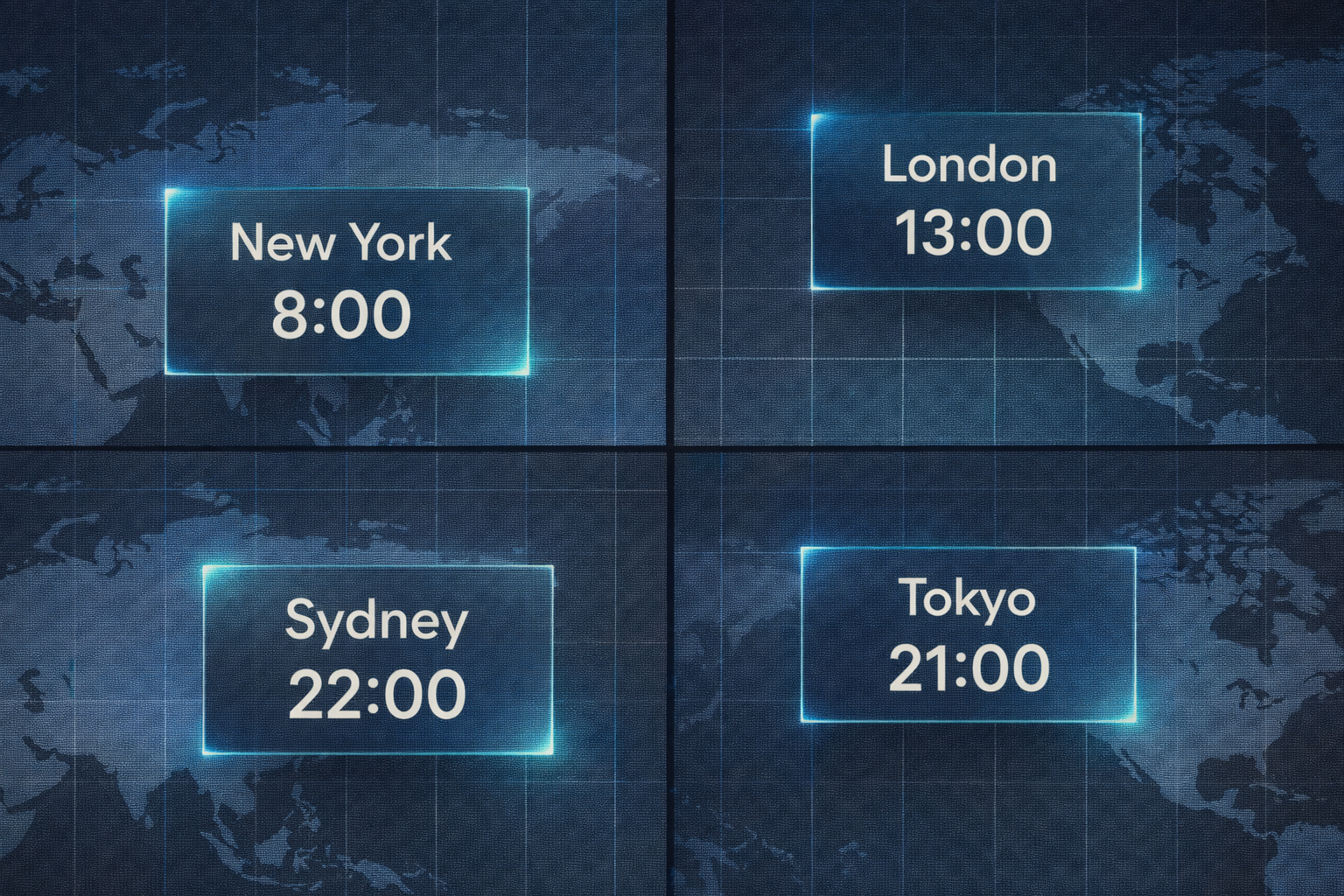
A fully async team can move slower on complex work. The fix is small: establish a short daily overlap window and pick a single reference time zone for deadlines.
- Overlap window: 60–120 minutes where everyone is online (even 1 hour helps).
- Reference time zone: pick one “home clock” for deadlines and recurring schedules.
- Rotate pain: if meetings must be off-hours sometimes, rotate so one region isn’t punished forever.
Tool stack that scales (without becoming tool soup)
Pick one “source of truth” per function: chat, tasks, docs, files, design, video. Standardization prevents the classic remote problem: five places to look, zero place to trust.
Trello: visible work beats status meetings
Use a project tool as the truth: owners, due dates, definitions of done, and handoff notes. If tasks live in chat, they die in chat.
- Owners + due dates + next step on every task.
- Handoff notes that survive time zones.
- Templates for recurring processes.
Notion: build a “handbook-first” culture
Documentation reduces interruptions and repeat questions. It also protects consistency when the team grows and the founder can’t answer everything personally.
- Decision logs and process pages.
- Onboarding that doesn’t require live babysitting.
- Searchable, linkable knowledge.

Loom: replace meetings with updates people can watch later
When nuance matters, async video beats long message threads. Record a 3–5 minute update with context, walkthrough, and next steps.
- Fewer meetings, better clarity.
- More tone and nuance than text.
- Perfect for handoffs and reviews.
Communication protocols and meeting hygiene
If your team is meeting constantly, it’s usually a systems gap. Fix meetings by improving inputs, outcomes, and documentation.
- Agendas first: no agenda, no meeting.
- Docs during: capture decisions and actions live.
- Record + recap: async teammates shouldn’t be punished for sleeping.
- Use threads: keep conversations searchable and organized.
Outcomes over hours: the scaling mindset
Time zones make “hours watched” management impossible. Measure what matters: outcomes, quality, and impact. Use SMART goals or OKRs so everyone knows what success looks like and can schedule work around local peak energy.
Hire and onboard for async success
The easiest way to scale is to hire people who can thrive asynchronously: strong written communication, self-management, and comfort with documentation.
- Hire for writing and clarity, not just technical ability.
- Assign a buddy in a similar time zone for fast ramp-up.
- Use onboarding checklists and a handbook so new hires can self-serve.
Well-being without “always-on”
Time-zone work can quietly turn into boundary erosion. Protect people with explicit off-hours norms, scheduled messages, rotating meeting times, and “no meeting” focus blocks.
If your team needs a simple boundary reset during peak seasons, the Holiday Remote Work Checklist is reusable year-round.
30-day implementation playbook
- Week 1: define channels, response expectations, and off-hours rules.
- Week 2: set overlap hours + pick reference time zone + rotate meeting times.
- Week 3: create a wiki: decision log, “how we work,” meeting templates.
- Week 4: audit meetings, replace 20–30% with async updates, and standardize project templates.
When systems are strong, time zones become a feature: your team can move work forward around the clock without burning out.
Want remote systems that actually help you reach your goals?
Strong frameworks don’t exist in isolation. They’re connected to how you set goals, manage energy, and plan life beyond your laptop.
The staff partially generated this text content with ChatGPT, OpenAI’s large-scale language-generation model. Upon generating draft language, the staff reviewed, researched, and revised the language to their own liking and takes ultimate responsibility for the content of this publication. Dryfter Bloom may receive free products from manufacturers for review purposes. We do not accept payment for positive coverage, and all opinions are our own. We may also earn a commission when you buy through a link on our site.