
Realistic Goal Setting for Remote Workers: Less Hustle, More Progress
January motivation is loud. Real life is louder. This guide helps remote workers turn goals into sustainable progress using simple frameworks, micro-actions, and deep-work blocks that survive time zones, distractions, and calendar chaos.

In this guide
Why remote work makes goal setting harder
Setting goals is already challenging. Remote work adds extra friction: blurred boundaries, fewer natural cues for starting and stopping, constant notifications, and the strange reality of working in the same place you relax.
When your environment is flexible, your goals must be flexible too. The win is not perfection: it is consistency you can maintain across travel days, family interruptions, and unpredictable weeks.
Why resolutions fail
Most resolutions collapse for one simple reason: they are vague, rigid, or built on motivation alone. When you miss a day, it feels like failure. Then momentum disappears.
A better approach is a system: you define what success looks like, break it into small actions, and schedule those actions into your real calendar. Motivation becomes a bonus, not the engine.
Frameworks that actually help
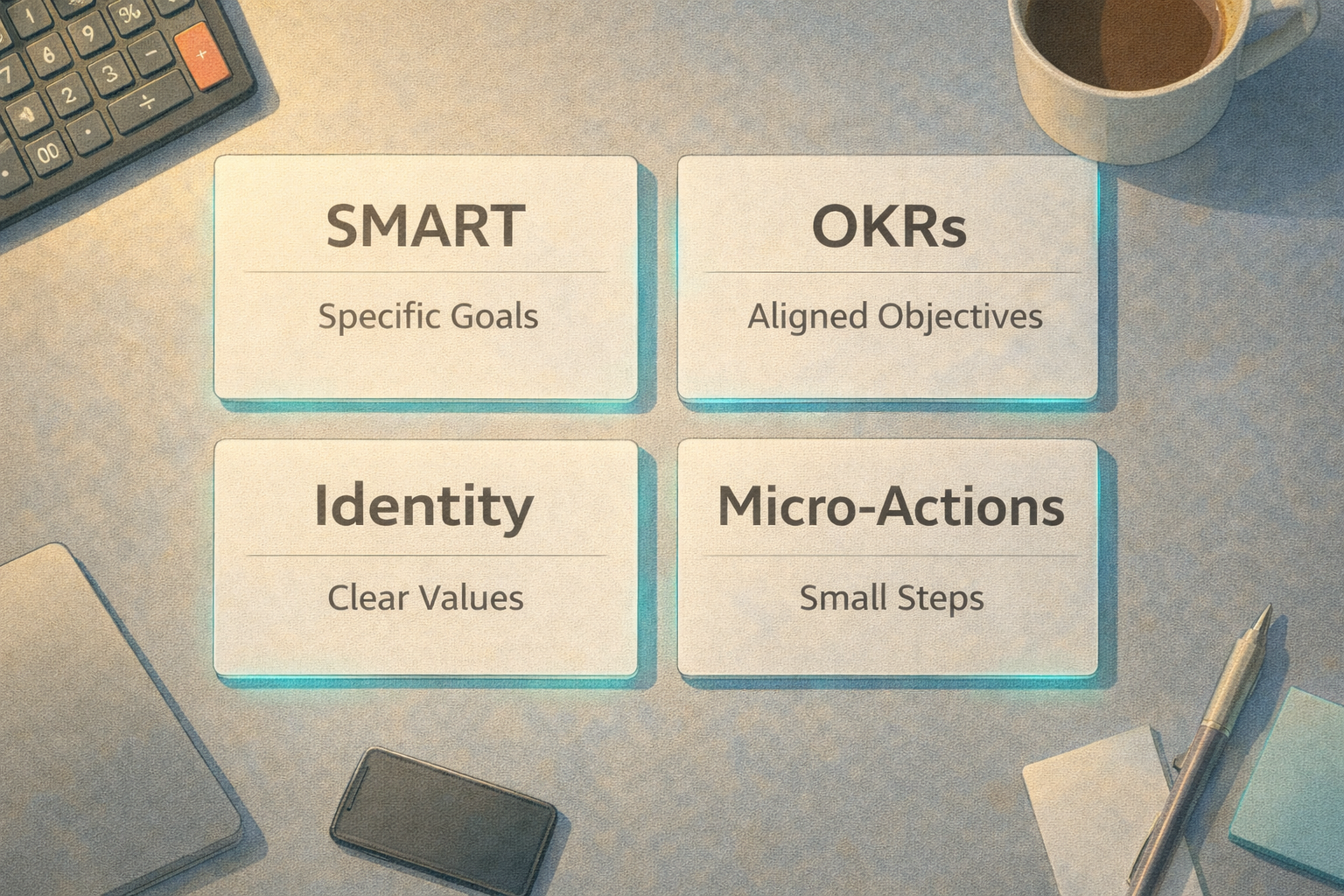
Use frameworks as guardrails, not handcuffs. Here are four that work especially well for remote workers:
SMART Goals
Best for: projects with clear deliverables.
OKRs
Best for: teams across time zones.
Identity-Based Goals
Best for: habits and lifestyle changes.
Micro-Actions
Best for: busy weeks and low energy days.
SMART: an example that fits remote life
- Specific: Write three client proposals.
- Measurable: Track submitted proposals in your CRM or tracker.
- Achievable: Choose a number that matches your actual bandwidth.
- Relevant: Tie it to quarterly revenue or pipeline goals.
- Time-bound: Deadline by end of week, allowing approvals across time zones.
Dual layers: personal goals and team goals
If you work on a distributed team, build two layers: individual outcomes you control and shared outcomes the team tracks together. This keeps you moving even when schedules do not overlap perfectly.
Micro-actions and deep work blocks
Big goals become doable when they turn into small actions you can complete in one focused session. The remote work secret is simple: schedule deep work like it is a meeting.
Deep work block rule
- Pick 1 daily priority: one meaningful output.
- Schedule 60 to 120 minutes with notifications off.
- Batch shallow work later: email, admin, messages.
Celebrate micro wins
Checking off small tasks builds progress, reduces overwhelm, and makes consistency feel rewarding instead of punishing.
Protect your mental health while pursuing goals
Remote work success is not only about output. Your nervous system is part of your workflow. If you want goals that last, protect sleep, movement, and boundaries.
- Boundaries: set work hours and a shutdown ritual.
- Movement: daily walks and light strength work build stamina.
- Connection: reduce isolation with coworking sessions or weekly check-ins.
- Distraction control: use website blockers during focus blocks.
If you need a simple boundary reset for busy seasons, the Holiday Remote Work Checklist is built exactly for that.
Tools that keep you consistent
You do not need more apps. You need fewer tools used consistently. Here are three that pair well with realistic goal setting:
Notion: a simple goals dashboard that stays visible
Use Notion to keep your goals in one place: outcomes, weekly plan, and a small habit tracker. Visibility matters: goals you never see tend to become goals you never do.
- One page: outcomes, weekly focus, next actions.
- Easy templates for recurring reviews.
- Great for remote teams and solo work.

Todoist or Things: micro-actions that actually get done
The easiest way to stay consistent is to reduce every goal into the smallest next action. A task manager helps you capture those actions, schedule them, and stop relying on memory.
- Turns big goals into next steps.
- Recurring tasks for habits and reviews.
- Works well with time blocking.

Motion: deep work blocks with guardrails
Remote work thrives on intentional scheduling. A time-blocking planner helps you protect focus time and avoids the classic trap: planning a perfect week that your calendar cannot support.
- Turns tasks into scheduled blocks.
- Helps you plan based on capacity.
- Reduces “always on” creep.
Step-by-step plan: realistic goal setting in one hour
- Reflect: write why the goal matters and what it protects.
- Define outcomes: make success measurable and time-bound.
- Break it down: convert goals into micro-actions you can finish in one session.
- Schedule: block deep work first, then fit everything else around it.
- Set boundaries: choose your work hours and shutdown ritual.
- Check in: weekly review: keep, change, drop.
- Celebrate: track micro wins and reward consistency.
Realistic goals are not smaller dreams. They are dreams that survive your actual life.
Want a copy-and-paste system for busy seasons?
The Holiday Remote Work Checklist is reusable year-round: boundaries, deep work blocks, travel-proof planning, and a quick mental reset routine. Our Budget Travel Hacking Guide packs smart ways to save on flights, stays, and gear—so you can plan boldly and travel calmly.
The staff partially generated this text content with ChatGPT, OpenAI’s large-scale language-generation model. Upon generating draft language, the staff reviewed, researched, and revised the language to their own liking and takes ultimate responsibility for the content of this publication. Dryfter Bloom may receive free products from manufacturers for review purposes. We do not accept payment for positive coverage, and all opinions are our own. We may also earn a commission when you buy through a link on our site.