Digital Nomad Deep Work: A Focus System for Remote Creators on the Move
Deep work for digital nomads: discover a science-backed focus system, powerful routines, and portable tools that help you stay productive, energized, and distraction-proof while you work from anywhere in the world.

In this guide
- Why deep work matters more than location
- Build your focus foundation before you travel
- Craft a mobile office on the fly
- Develop deep-focus habits that travel with you
- Daily regimen: discipline over motivation
- Build systems and boundaries that keep you grounded
- Gear and digital tools that protect your focus
- Wellness and mindfulness for sharper concentration
- Disconnect and recharge without losing momentum
- Bringing it all together
Why deep work matters more than the view
Scroll through any digital-nomad vlog and you’ll see hammocks, rooftop pools, and scenic coworking spaces. What you don’t always see is the invisible skill that keeps the whole lifestyle from falling apart: the ability to sit down, block out noise, and do serious deep work when your surroundings are constantly changing.
Deep work is your unfair advantage. It’s the ability to concentrate without distraction on cognitively demanding tasks so you can produce higher-quality results in less time. When you live on the road, that skill becomes your real currency. It’s what lets you hit deadlines from airports, finish big projects between long train rides, and grow your business while everyone else is stuck refreshing their inbox.
The good news: deep work isn’t about willpower or waiting for the perfect environment. It’s about systems, routines, and gear that travel with you. The rest of this guide breaks that down into a portable playbook you can use in any city.
Build your focus foundation before you travel
Deep work on the road starts long before you’re at the gate. The more decisions you make ahead of time, the more brainpower you free up later for real work instead of logistics.
Set expectations with clients and teammates
Before you leave, communicate your schedule, time-zone shifts, and availability. Let clients know when you’ll typically be online, which days you’ll be in transit, and how quickly they can expect replies. This reduces “Are you around?” pings and gives you permission to protect your focus windows.
Pre-plan offline work
Assume Wi-Fi will fail you at the worst possible moment. Plan tasks that don’t require internet — like writing, outlining, brainstorming, or reading — for flights, buses, and patchy hostels. Keep a running list of offline tasks in your notes app so you can instantly switch into deep work when you’re disconnected.
Assemble a minimal but potent mobile office
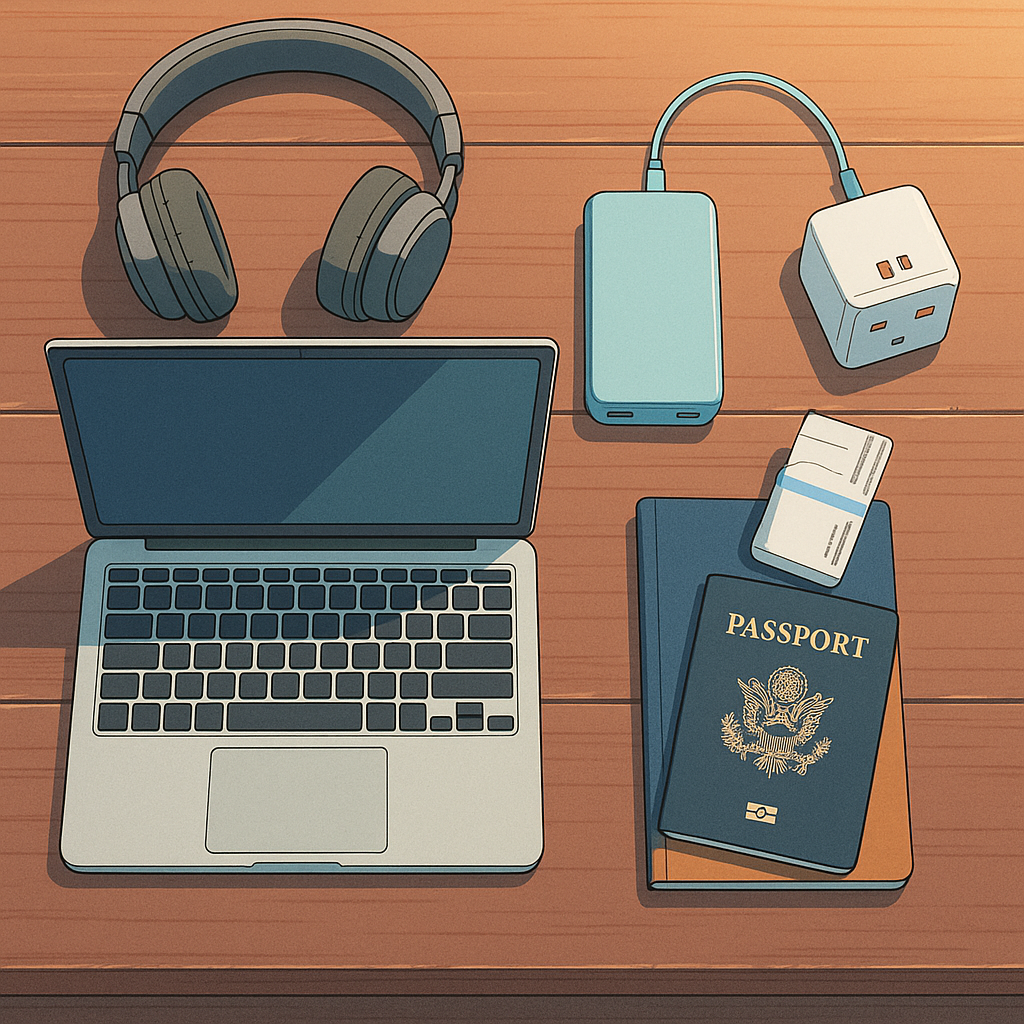
- Lightweight laptop: your primary command center.
- Noise-canceling headphones: instant focus bubble on planes, buses, and shared spaces.
- Power bank and universal adapter: because low battery is the fastest way to kill a focus session.
- VPN and cloud backups: protect your data on sketchy networks and keep your projects synced.
- Portable stand and mouse: reduce neck strain and make long sessions physically sustainable.
Once this kit is dialed in, you can work almost anywhere with a table and a power outlet.
Craft a mobile office on the fly
Your environment quietly shapes how well you can think. You don’t need a perfect setup — you just need a good-enough workspace that your brain learns to associate with focus.
Choose your workspace with intention
When you land in a new city, think like a director scouting locations:
- Coworking spaces: ideal for deep work days. Look for quiet zones, phone booths, and reliable Wi-Fi.
- Cafés: great for lighter tasks. Prioritize outlets, stable internet, and a vibe that isn’t pure chaos.
- Airbnbs and hostels: designate a specific chair or corner as your “office” and use it consistently.
Over time, your brain starts to treat that chair or café corner like a “focus anchor” — sit there, and it knows it’s time to work.
Embrace flexibility, not rigid routines
Time zones will shift. Trains will be delayed. Friends will spontaneously invite you to waterfalls. Instead of clinging to a strict 9-to-5, build flexible systems:
- Define your non-negotiable deep work blocks (for example, 9–11 a.m. local time).
- Schedule calls and admin work in lower-energy windows.
- Let your routine bend around your location while your focus habits stay consistent.
Use movement as a reset button
If you hit a wall, don’t just sit there spiraling in your inbox. Change locations — move from your Airbnb to a café, from a café to a park bench, or from indoors to a balcony. That small environmental reset can deliver a surprising creativity boost and get you back into flow.
Develop deep-focus habits that travel with you
Deep work isn’t about one heroic six-hour grind. It’s about repeatable habits you can deploy in any city, in almost any space.
Block your deep work like appointments
Treat focused work as sacred calendar events, not “something you’ll squeeze in.” Block 90–120-minute sessions and defend them. During those blocks:
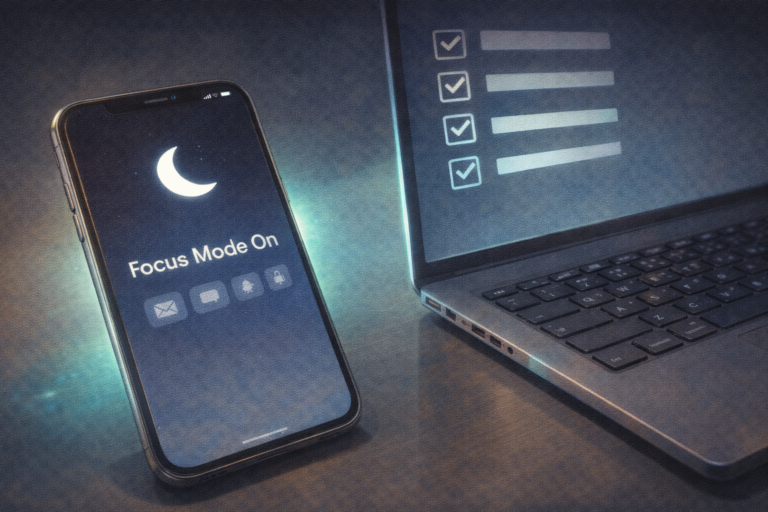
- Silence notifications.
- Close chat apps and non-essential tabs.
- Put your phone on airplane mode or in another room.
Eat the frog
Start your day with your most important or mentally demanding task. When you land that first win, everything else feels lighter — and you won’t be trying to write a sales page at 11 p.m. after a full day of sightseeing.
Use simple focus frameworks
- Pomodoro rhythm: 25 minutes focused, 5 minutes break, repeated 4 times. Great for getting started when you feel scattered.
- Micro-goals: Break big projects into tiny, clear steps (“write intro,” “outline section one,” “draft call-to-action”) so you’re never staring at a blank page.
Layer in science-backed focus boosters
When you want an extra edge, experiment with:
- Neutral background sound: white noise, café noise, or low-key instrumentals.
- Moderate caffeine: enough to sharpen attention without crashing your energy later.
- Short reset meditations: 3–5 minutes of focused breathing between work blocks.
These aren’t mandatory, but they can help you get into deep work faster in unfamiliar environments.
Daily regimen: discipline over motivation
Motivation is unpredictable. Discipline is portable. The trick is designing a daily rhythm that doesn’t collapse every time your location changes.
Build a simple, repeatable day structure
Think in phases instead of minute-by-minute schedules:
- Phase 1: Morning reset — light movement, water, quick journaling or planning.
- Phase 2: Deep work — 1–3 focus blocks for your highest-value tasks.
- Phase 3: Admin and communication — inbox, messages, logistics.
- Phase 4: Movement and exploration — walk, workout, or city time.
- Phase 5: Light work or learning — reading, skill-building, planning tomorrow.
Avoid the “eternal tomorrow” trap
When you catch yourself thinking “I’ll start tomorrow,” shrink the task and start in the next five minutes instead. Open the doc. Draft the outline. Send the first pitch. Building a bias toward action matters more than waiting for the perfect vibe.
Batch communication instead of living in your inbox
Check messages and email two or three times a day instead of constantly. Group similar tasks — replies, scheduling, admin — into short bursts. Every tab you don’t switch to is energy you keep for deep work.
Build systems and boundaries that keep you grounded
When your physical environment is chaotic, systems become your portable stability. They keep your work moving even when you’re in three countries in one month.
Create a portable workflow system
Pick a simple stack and stick with it across devices:
- Project manager: Trello, Notion, Asana, or ClickUp to track tasks and deadlines.
- Knowledge base: a single notes app for ideas, templates, and checklists.
- Cloud storage: Google Drive, Dropbox, or Koofr for files and collaboration.
The tools matter less than consistency. Everything important should be easy to find from any device, anywhere.
Set clear boundaries and honor them
Freedom without boundaries turns into chaos. Protect your deep work by:
- Setting specific hours for messages and sticking to them.
- Telling clients exactly when you’re available for calls.
- Letting travel partners know when you’re “in session” and off-limits.
Boundaries aren’t about being difficult — they’re about guaranteeing that you can keep delivering your best work while still enjoying the trip.
Gear and digital tools that protect your focus
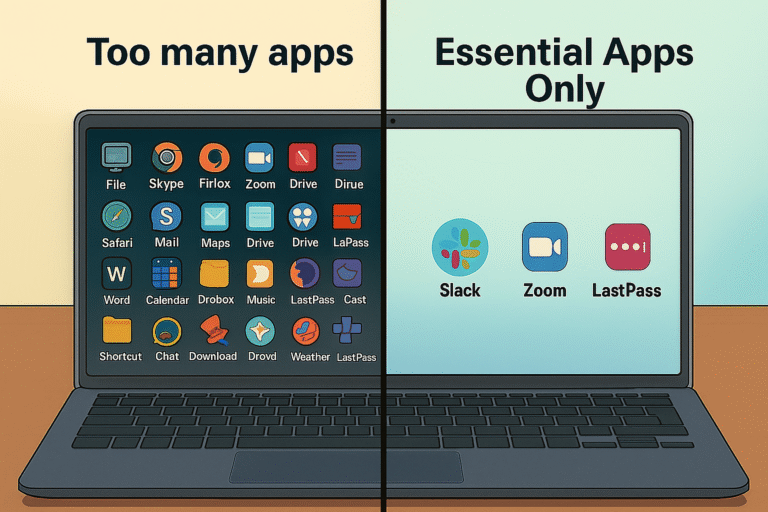
You don’t need a hundred apps. You need a lean stack that removes friction and guards your attention.
Focus and time-tracking helpers
- RescueTime or similar: shows where your time actually goes and nudges you when you drift into distraction.
- Timer apps or physical timers: anchor your deep-work blocks and keep breaks honest.
Task and knowledge hubs
- Notion, Evernote, or Obsidian: store notes, templates, and SOPs in one place.
- Todoist or a simple task manager: manage daily to-dos and recurring routines.
File sanity and async communication
- Reliable cloud storage: stop losing hours hunting for files across devices.
- Async-friendly tools: Slack, Twist, or email used in batches instead of real-time back-and-forth.
Wellness and mindfulness for sharper concentration
Deep work runs on a human brain, not a processor. If your body is exhausted and your mind is frazzled, no technique will save you.
Protect your baseline: sleep, food, movement, water
- Sleep: aim for consistent hours even when you change time zones.
- Food: choose meals that don’t knock you out mid-session — lighter lunches, fewer sugar spikes.
- Movement: walks, yoga, or quick hotel workouts reset your energy and mood.
- Hydration: keep a bottle at your workspace and sip throughout deep-work blocks.
Use micro-breaks instead of mindless scrolling
Between focus sessions, give your brain true rest:
- Look out a window and let your eyes focus on distant objects.
- Do a couple minutes of deep breathing or a short body scan.
- Pick up a hobby: sketching, reading, or playing an instrument.
Mindfulness as a portable reset
Simple mindfulness practices help you notice when your attention drifts and gently pull it back. A few options:
- Five slow breaths before opening your laptop.
- A one-minute check-in between tasks: “What matters most next?”
- Short guided meditations during layovers or train rides.
Disconnect and recharge without losing momentum
Full-time hustle with zero rest isn’t freedom — it’s just a different brand of burnout. The goal is sustainable deep work, not permanent grind.
Schedule adventure time on purpose
Block time for wandering, exploring, and being fully offline. Treat that time as seriously as a client call. Phone in your pocket, notifications off, eyes on the city you traveled to see.
Set real no-work hours
Choose evenings or specific days when you don’t open your laptop. Let your brain connect dots in the background. Those off-hours are where many of your best ideas form.
Reflect to reinforce your systems
Once a week, ask yourself:
- Where did I get the best deep work this week?
- What sabotaged my focus?
- What’s one tweak I can make next week?
Fold those lessons into your routines and watch your ability to focus on the road compound over time.
Bringing it all together: a portable playbook for deep work
You don’t need a fixed office to do meaningful work. You need clear intention, simple systems, and a handful of habits that travel with you from city to city.
Plan ahead so logistics don’t hijack your brain. Assemble a compact mobile office and choose your workspaces with intention. Block deep-work sessions like appointments, build flexible routines around your energy, and let systems and boundaries carry some of the load.
When you pair those structures with real rest, movement, and curiosity about the places you visit, something powerful happens: your travel stops competing with your work and starts feeding it. Your changing office becomes an asset, not a distraction.
Ready to build your deep work system for the road?
You don’t have to wait for the “perfect setup” to start. Pick one habit from this guide, one workspace you can claim today, and one deep-work block on your calendar this week. Build from there and let your focus grow city by city.
The staff partially generated this text content with ChatGPT, OpenAI’s large-scale language-generation model. Upon generating draft language, the staff reviewed, researched, and revised the language to their own liking and takes ultimate responsibility for the content of this publication. Dryfter Bloom may receive free products from manufacturers for review purposes. We do not accept payment for positive coverage, and all opinions are our own. We may also earn a commission when you buy through a link on our site.