
Unbeatable Lodging Guide: Hidden Comfort Hacks to Save Serious Money in 2026
Lodging is usually the biggest budget eater on any trip. The trick is not choosing between Airbnb or hostels forever: it’s using both strategically, based on your trip length, energy, and comfort needs. This guide shows you how to save money without turning your accommodation into a survival game.

In this guide
Why lodging costs matter more than you think
When you travel for weeks or months, hotel pricing stacks up fast. Airbnbs can offer privacy and amenities at competitive prices when you book smart, while hostels can cut costs dramatically and add social connection. The right lodging strategy can be the difference between “I need to go home early” and “I can stay another month.”
Lodging is often your biggest expense: small savings add up fast.
Saving $15 a night becomes $450 per month.Cheap stays can cost you in sleep, stress, and productivity.
Comfort is a multiplier, not a luxury.Mixing hostels and Airbnbs helps you optimize for your needs.
Community first, quiet later, repeat.Airbnb money-saving hacks that protect comfort
Airbnb prices are not always “fixed.” Your best leverage is duration, timing, and how you communicate. The goal is not to be pushy: it’s to be a stable, low-maintenance guest that hosts actually want.
Stay longer: the discount lever
Weekly and monthly discounts can drop the nightly rate significantly. Slow travel also lowers stress and daily costs: fewer move days, fewer transit fees, more cooking, and better routines.
Message hosts: negotiate politely, especially off-peak
Simple negotiation message (copy and paste)
Hi {{HOST_NAME}}, I’m planning to stay from {{DATES}} and I’m very quiet, clean, and remote-working. Would you consider a long-stay discount for a {{X}}-week booking? I’m happy to book today if we can make the rate work. Thank you.
Compare platforms: the same place can be cheaper elsewhere
Many properties appear on multiple platforms with different promos. Check alternatives for better cancellation rules, loyalty discounts, or included breakfast. Use flexible search and broaden your map by a few blocks: the “tourist center tax” is real.
Read reviews like a detective
- Start with negatives: look for patterns like noise, cleanliness, or water issues.
- Trust guest photos: they reveal reality better than staged images.
- Confirm work needs: ask about Wi-Fi stability, desk setup, and where the router is.
Comfort upgrades that cost almost nothing
- Choose places with a real kitchen: cooking saves money and keeps energy stable.
- Prioritize natural light and ventilation: it matters more than you think.
- Pick a quieter neighborhood: fewer nightlife surprises, better sleep.
Hostel stays without sacrificing comfort
Modern hostels can be surprisingly comfortable: privacy curtains, pod beds, power outlets, coworking areas, and social events. The key is choosing the right hostel for your personality and work needs.
Look for the comfort trio: privacy, hygiene, and Wi-Fi
- Privacy: smaller dorms, curtains, reading lights, outlets.
- Hygiene: daily cleaning reviews, solid showers, ventilation.
- Wi-Fi: reliable signal in rooms and common areas, not “lobby-only.”
Use the kitchen: save money and build community
Cooking one meal per day in a hostel kitchen is a budget cheat code. It also turns strangers into travel friends faster than any icebreaker.
Safety basics that remove 90 percent of anxiety
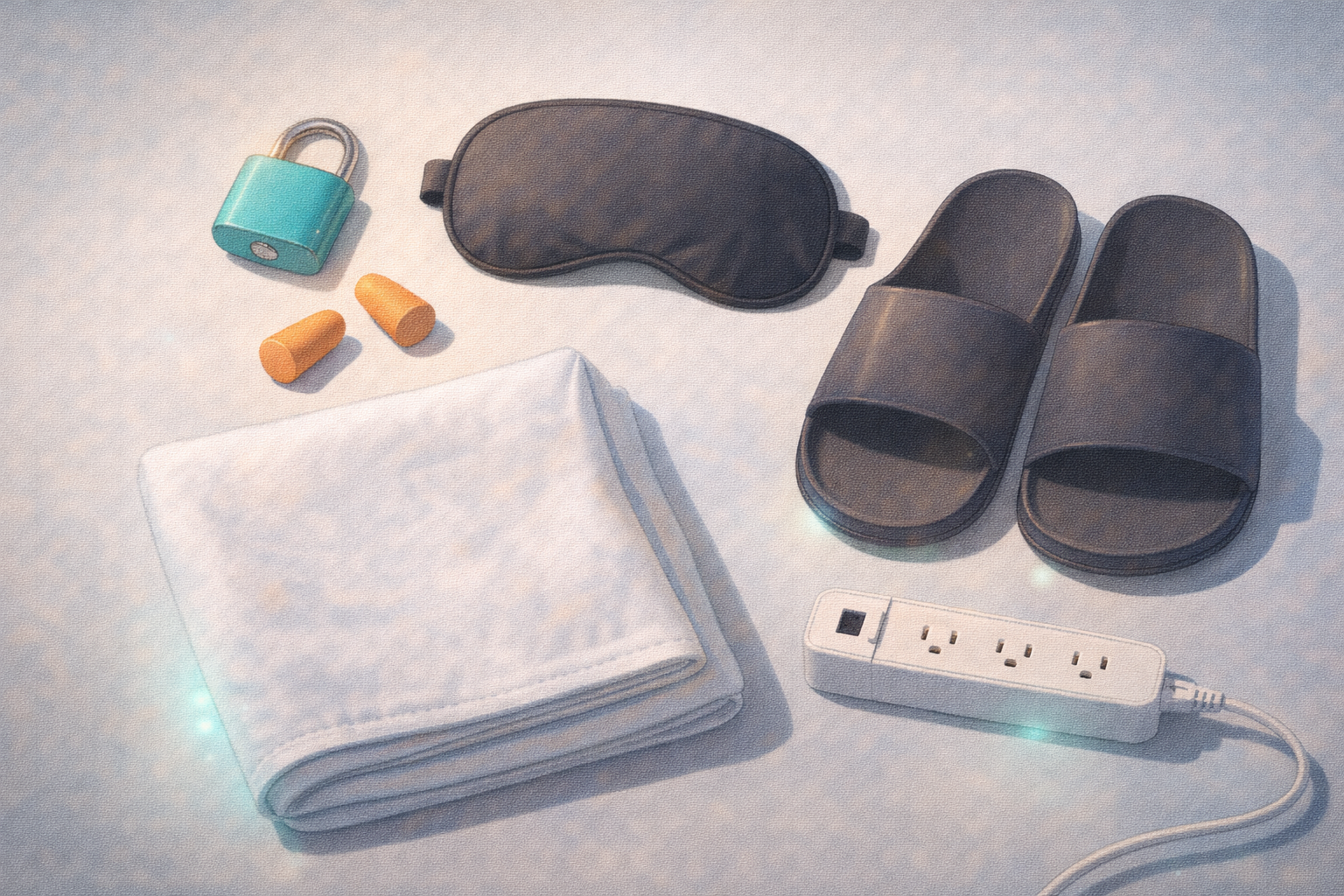
- Bring a padlock: lockers are only useful if you can lock them.
- Carry earplugs and an eye mask: sleep is comfort, sleep is sanity.
- Pick hostels with 24-hour reception when possible.
Remote work bonus: coworking-friendly hostels
Some hostels now cater directly to remote workers with coworking setups and better internet. If you need deep work time, choose hostels that advertise workspaces and verify in reviews.
Airbnb vs hostels: how to choose the right stay
The best option depends on your mission. Use this simple decision lens:
When you need privacy, stable routines, and deep work.
Great for couples, long stays, and recharge weeks.When you want low cost, social connection, and location.
Great for scouting a city and meeting people fast.Start social, then go quiet: hostel first, Airbnb after.
This is the “best of both” method.Remember: comfort is not “fancy.” Comfort is sleep, safety, and the ability to recover your energy so travel stays fun.
Comfort and safety checklist before you book
Quick checks that prevent regret
- Is the area walkable and safe at night?
- Are there consistent reviews about noise or cleanliness?
- Can you check in late if needed?
- Is there reliable Wi-Fi and a workable space?
- Hostel only: lockers, reception hours, and bathroom hygiene reviews.
A simple lodging strategy that works almost everywhere
- Days 1–3: hostel in a central area: meet people, learn the city, get local tips.
- Week 1–4: Airbnb with a kitchen and calm setup: settle in, work, recover.
- Optional: repeat: hostel weekends for social energy, Airbnb weekdays for deep work.
You’re not picking “the one perfect accommodation.” You’re building a rhythm that protects your wallet and your wellbeing.
Tools and platforms that make budget lodging easier
These are the three tools that reduce the time you spend hunting, increase comfort, and help you avoid bad stays. Swap these placeholders with your affiliate links and images.

Hostel booking platforms: filter for comfort fast
Use filters for small dorms, privacy curtains, lockers, and strong reviews. This saves you from “cheap” that becomes expensive in regret.
- Comfort-focused filters and honest reviews.
- Easy comparisons by neighborhood.
- Great for scout stays and short trips.

eSIM data: protect yourself from “Wi-Fi lies”
Sometimes the Wi-Fi is “great” until you open a video call. A travel eSIM gives you a backup so your work doesn’t depend on luck.
- Instant setup in many countries.
- Backup for weak hostel Wi-Fi.
- Useful for late check-ins and maps.
House sitting and work exchange: the zero-lodging option
If you can be responsible and consistent, housesitting can reduce lodging costs to almost zero: perfect for longer stays and slow travel.
- Great for longer stays and quiet work weeks.
- Comfort tends to be higher than dorms.
- Best for travelers who like routine and responsibility.
Want a plug-and-play system for saving on travel all year?
Get the Budget Travel Hacking Guide: deal timing, booking routines, and checklists that help you spend less and travel longer. Price: $9.99.
The staff partially generated this text content with ChatGPT, OpenAI’s large-scale language-generation model. Upon generating draft language, the staff reviewed, researched, and revised the language to their own liking and takes ultimate responsibility for the content of this publication. Dryfter Bloom may receive free products from manufacturers for review purposes. We do not accept payment for positive coverage, and all opinions are our own. We may also earn a commission when you buy through a link on our site.